

Determining the Source of Petrified Wood Jasper-Sam Rayburn Reservoir Collecting Areas
(From the September 2020 Issue)
Scott’s paper “Petrified Wood in the Miocene Fleming Formation, Jasper County, Texas ” was first published in 2008 in the Gulf Coast Association of Geological Societies’ Transactions publication. In the September 2020 issue of the Backbender’s Gazette, Scott recounts how a field trip to the Jasper/Sam Rayburn Reservoir area lead to the writing of this paper. Included below are a collection of photos from that trip. Read below for an abstract from the paper and a link to download in its entirety.
ABSTRACT
The stratigraphic occurrence of silicified fossil woods in outcrops is documented for a study area in northern Jasper County, Texas, south of the Sam Rayburn Reservoir. This area is located at the northern erosional termination of both the Pliocene Willis Formation and the Miocene Fleming Formation where they overlap the Oligocene to
Lower Miocene Catahoula Formation.
The upper Catahoula Formation consists of hard, gray to white clayey siltstone and is eroded at the top. It does not contain fossil wood in the study area. The unconformity separating it from overlying formations has many tens of ft of relief over relatively short distances. The Fleming Formation overlies the Catahoula Formation and thins from
about 50-70 ft (15-21 m) to wedge-out within the study area but thickens dramatically downdip. It consists of fine to medium clayey sandstone or sandy claystone with poor sorting and is typically mottled with masses of orange and gray clay, suggesting extensive soil formation on the sediments. The Willis Formation forms an unconformable cap
on top of the Fleming Formation and consists of fine to coarse fluvial sandstone that is often iron-stained and cemented.
Petrified wood found in situ occurs within relatively narrow lenses of fluvial stream channels within the lower 10 ft (3 m) of the Fleming Formation. The wood varies from small pieces to large logs and typically has a small degree of rounding, indicating that it is not in the original fossilization location. However, the presence of large, intact logs indicates that it has not been transported far. Paleobotanical evidence corroborates this, indicating that the logs are either Miocene or Oligocene in origin. This suggests that the petrified wood may have been sourced either in the (now absent) uppermost Catahoula or the lowermost Fleming and that reworking of the sediments exposed and redeposited the fossilized wood.
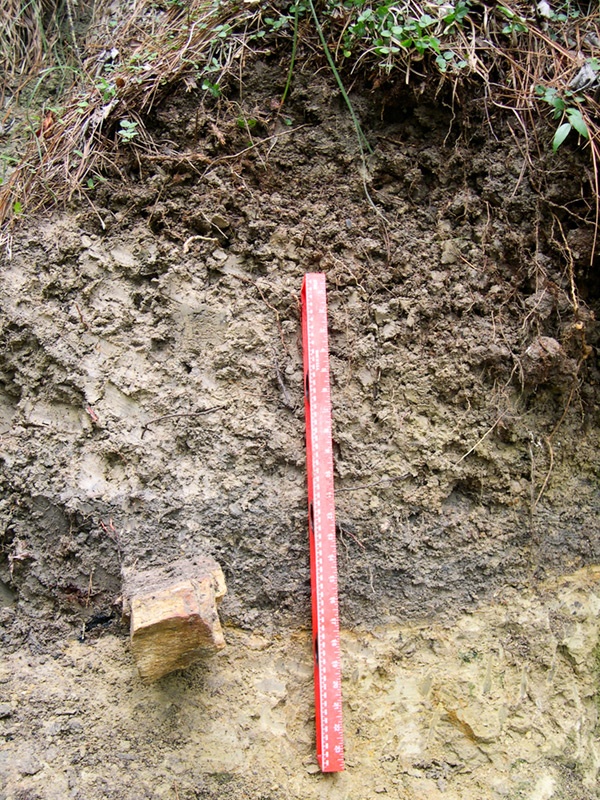
Figure 1: A piece of golden and red petrified wood sticking out of the bank in the base of the Fleming Formation (dark brown) just above the contact with the Catahoula Formation (light tan).
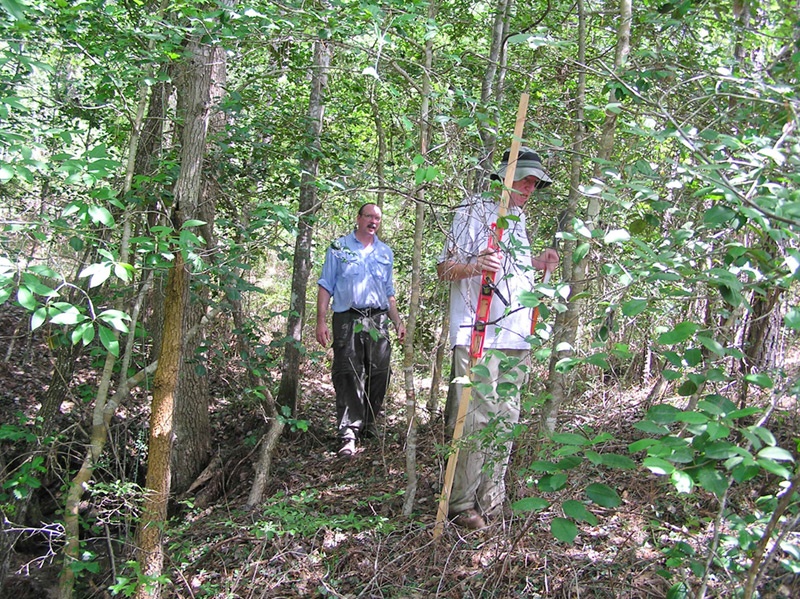
Figure 2: Neal and Bill traversing to the next survey site with Neal’s homemade theodolite.
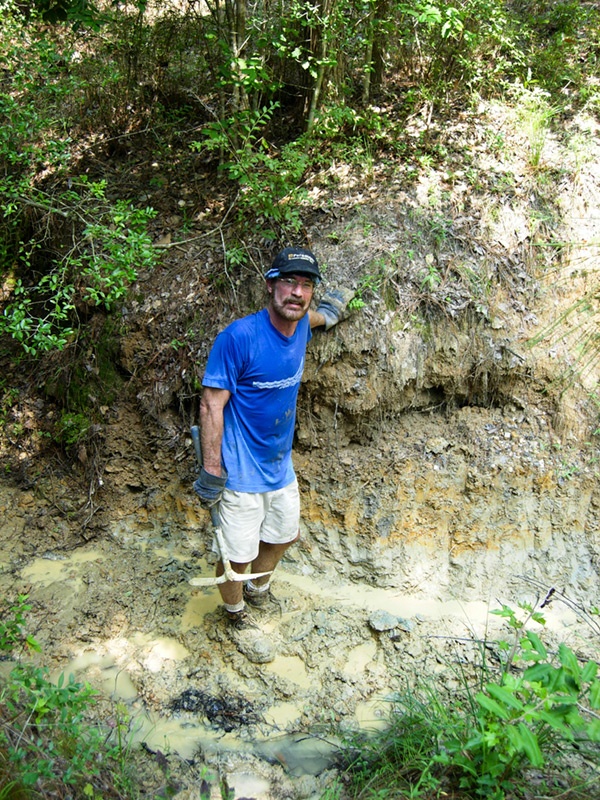
Figure 3: Me digging out my best example of Fleming/Catahoula contact. This contact was used in my article.
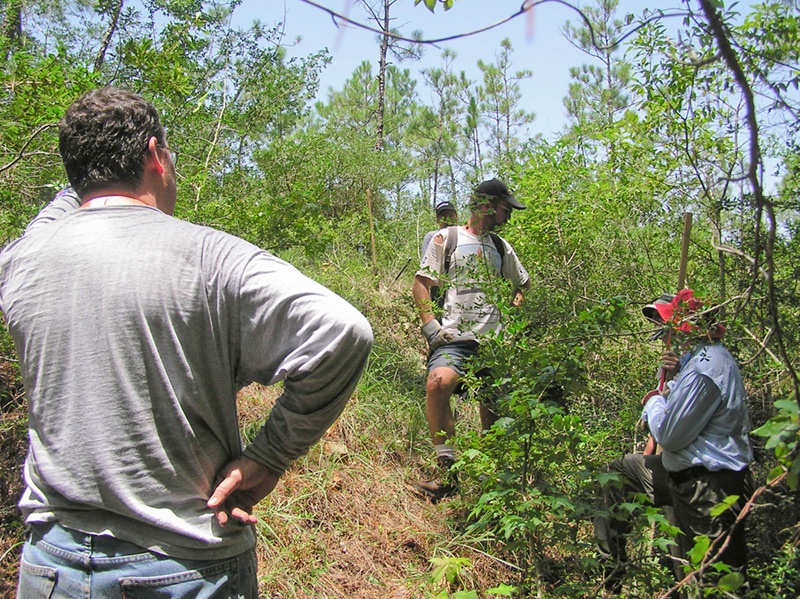
Figure 4: Discussing our digs at a wood site we found. Foreground is Owen, I’m in the center, Robert is behind me, and Bill (red hat) and Neal are in the hole.
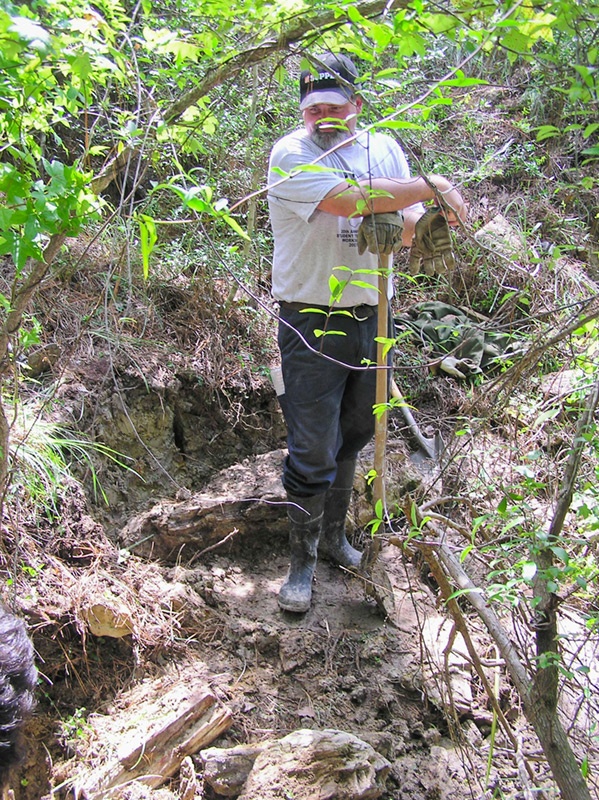
Figure 5: Robert in the hole pictured in the previous figure.
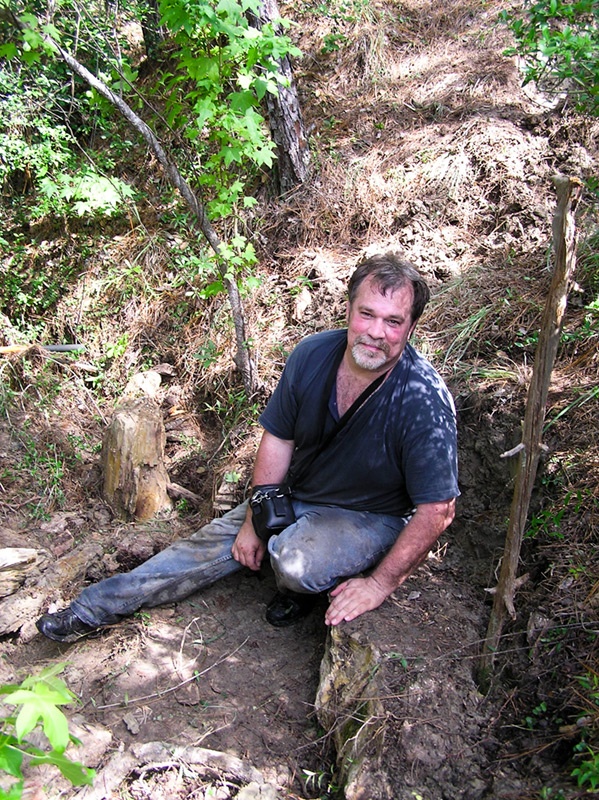
Figure 6: Mike resting on a huge log in the same hole as in Figures 4 and 5. We dug the log out of the bank but it ended up being so large that we couldn’t move it. It stayed right there in the end.
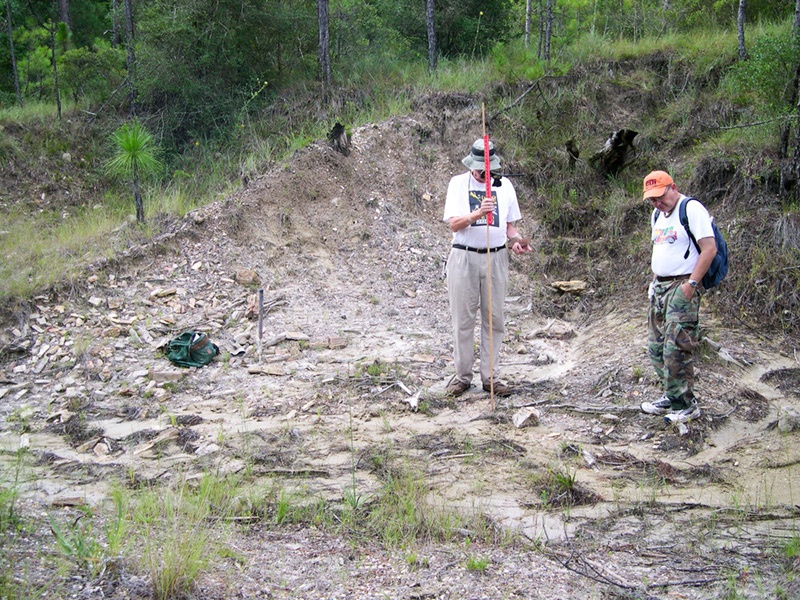
Figure 7: The ‘red wood’ site, which was one of the survey points. Neal is with the theodolite and Rick Rexroad is next to him.
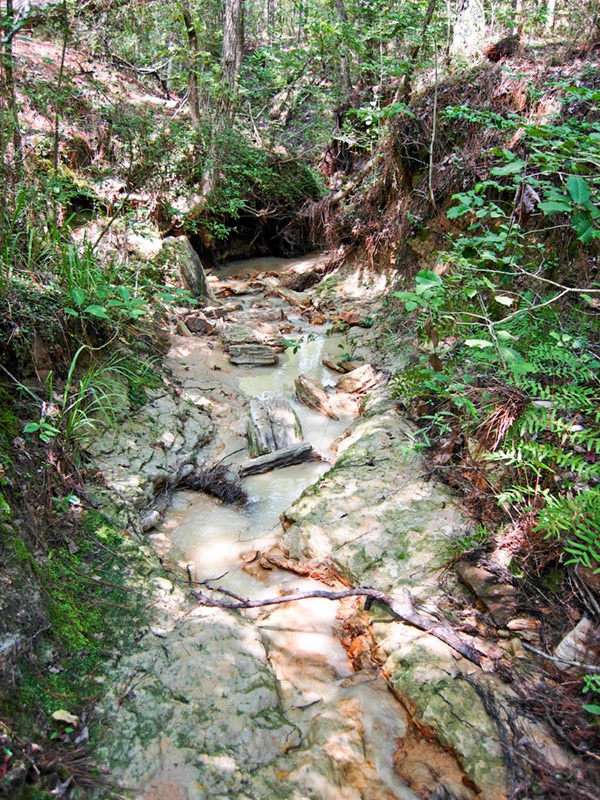
Figure 8: One of the stream bottoms we found in our searches. Note the large pieces laying around. The flat stream bottom is actually the top of the Catahoula which is a hard clay that resists erosion.
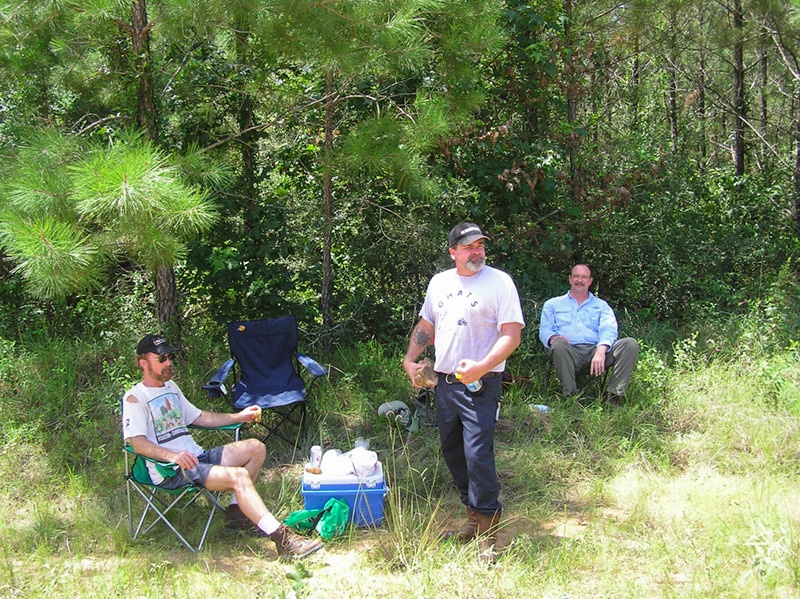
Figure 9: Taking a lunch break during one of our trips. I’m in the chair, Robert is standing and Bill is behind him.
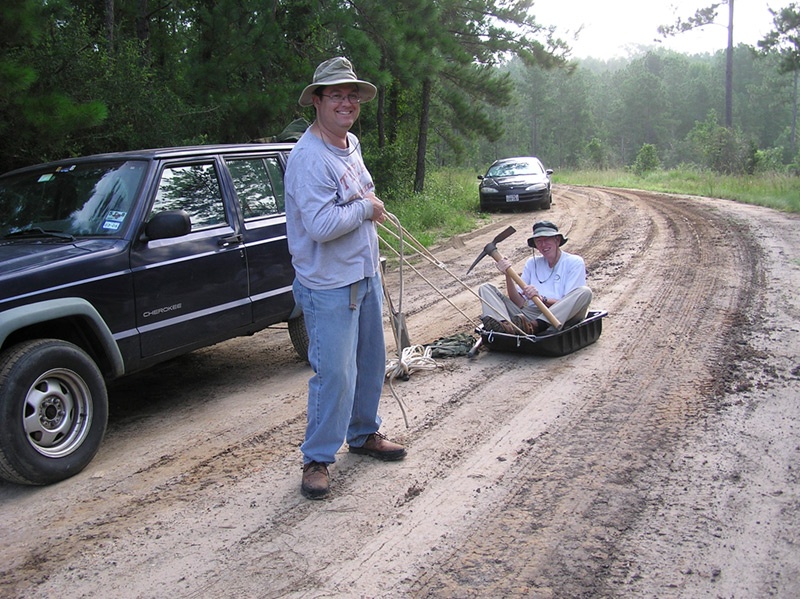
Figure 10: Neal ordering Owen to pull him down to the stream under threat of impalement with his pick. Owen came up with this contraption to drag large pieces out of the stream and up the bank. We actually needed a horse or donkey to do that kind of work.