

Fire and Ice
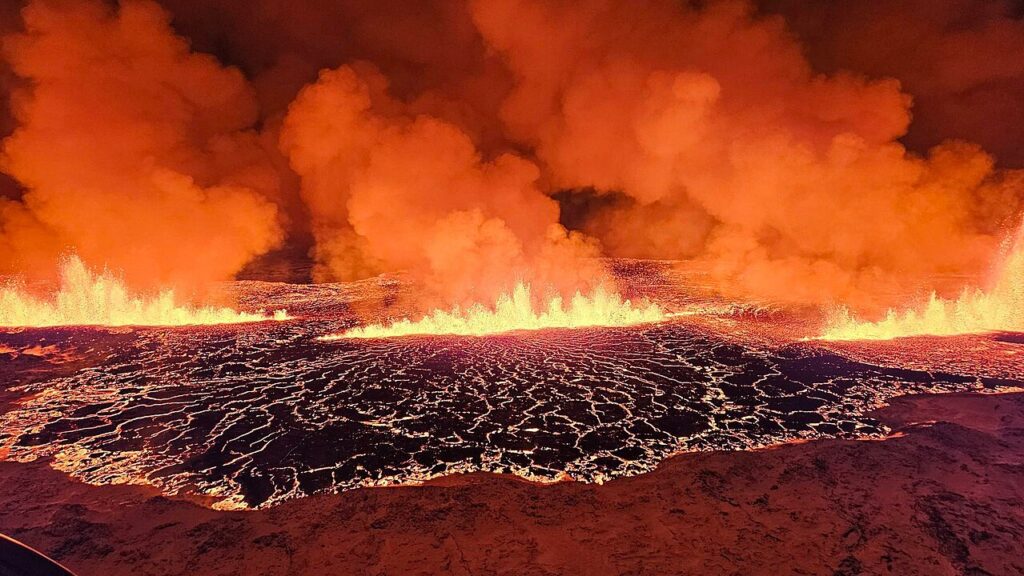
That describes Iceland, an island north of Ireland and Great Britain, and similar in size to both.
Geologically speaking, Iceland is very young, having been formed in the last 20 or so million years by the Icelandic hot spot along the Mid-Atlantic Ridge, where the North American and Eurasian Tectonic Plates meet. The plates are pushed apart here by eruptions of basalt, creating new oceanic crust.
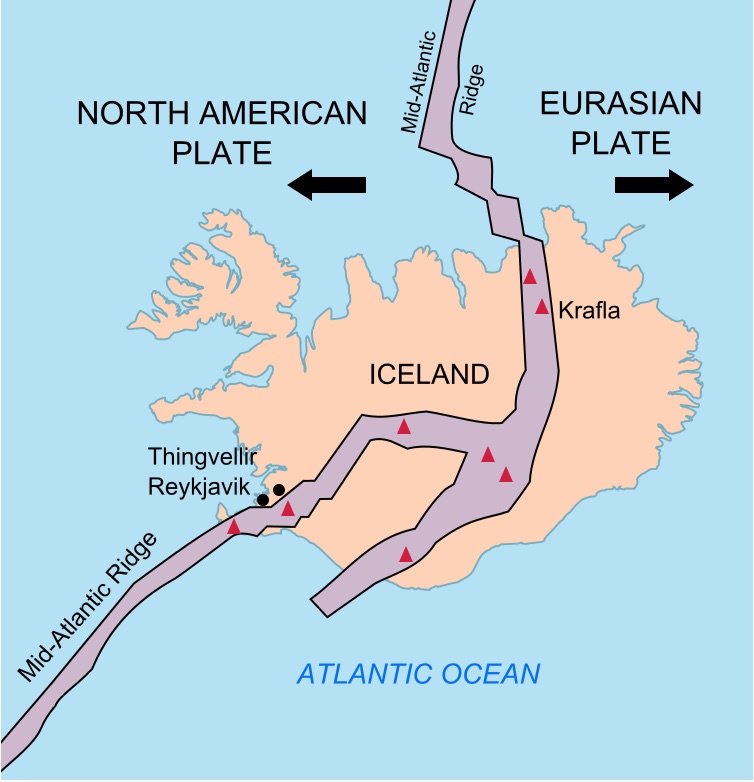
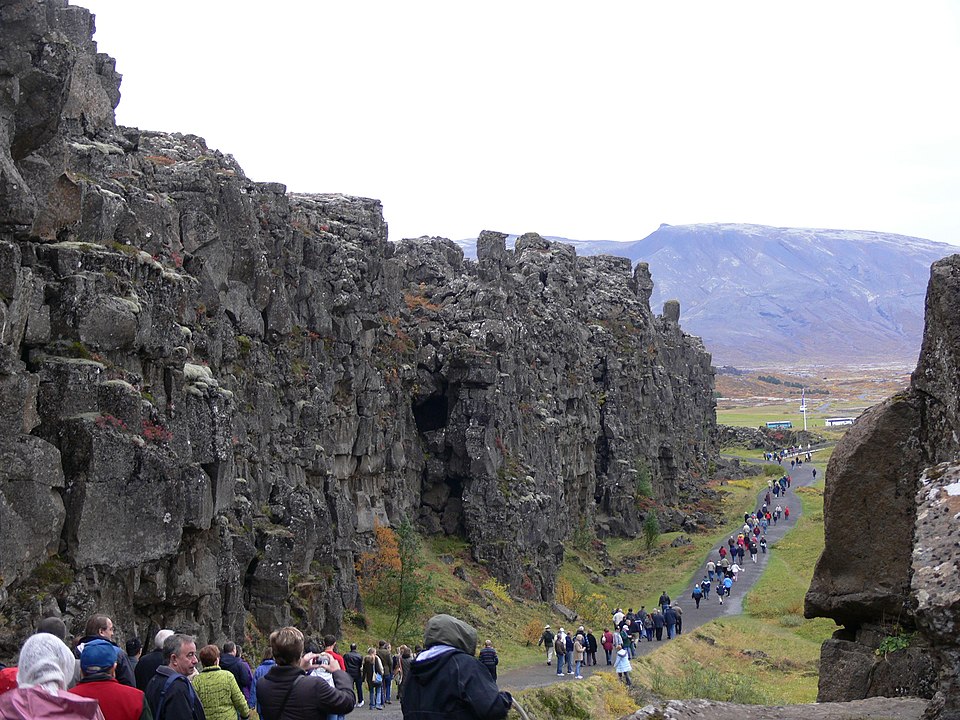
Yes, but it’s on dry land? Well, it is, but this is the only place where the Mid-Atlantic Ridge is at the surface. In fact, it is actually quite a tourist attraction in Iceland’s Thingvellir National Park, very popular with geologists and other scientists because you can walk the Ridge. This part of the Mid-Atlantic Ridge is the Reykjanes Ridge, also called the Reykjanes Peninsula on conventional maps. When you look at such a conventional map, it reminds me of the patterns made by a candle as wax spills first in one direction, then another.
Iceland is the surface expression of the Icelandic Basalt Plateau, an igneous province stretching from Greenland to the British Isles. It is bounded by the Greenland-Iceland Ridge on the west, by the Kolbeinsey Ridge on the north, the Iceland-Faeroe Ridge on the east and the Reykjanes Ridge on the south. Around 56 million years ago, the Plateau began forming due to the opening of the North Atlantic resulting from the interaction of the Icelandic Hot Spot as it tracked east across Greenland and into Iceland, and the Mid-Atlantic Ridge, an active rift zone.
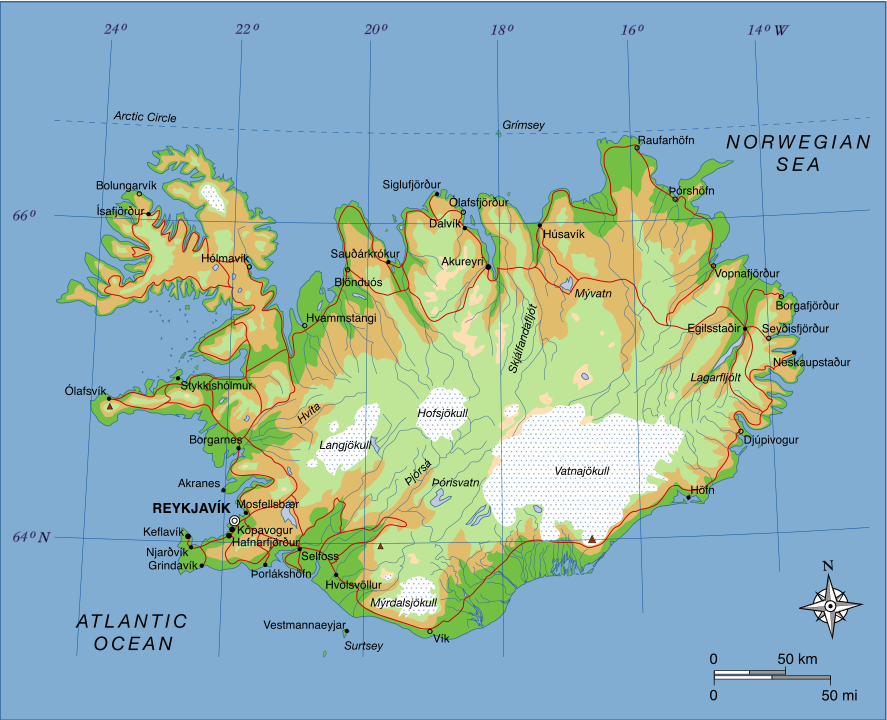
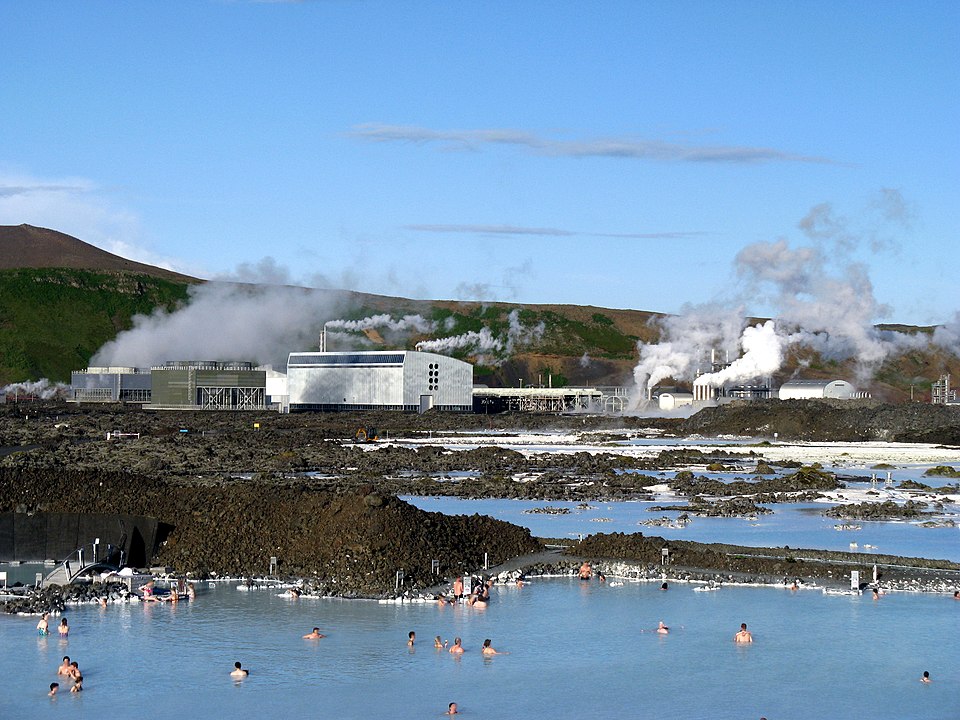
The eruption was preceded, as are many volcanic eruptions, by seismic swarms of varying strength beginning on October 24 this year. Breathless reports of the damage a potential eruption could do soon followed. Fortunately, seismologists can track underground earthquakes and use them to plot the movement of magma. Evacuations of the town of Grindavik on the Reykjanes Peninsula were ordered in early November. The famous Blue Lagoon geothermal spa just north of Grindavik was also closed due to the threat of eruption. It is not a natural hot spring, but is supplied by water from the Svartsengi geothermal power station.
The eruption began on the 18th of December northeast of Grindavík and east of the Blue Lagoon near Sundhnúkagigar, in a chain of craters, opening a fissure about 2.5 miles long. Now it is being designated the Sundhnúkur Eruption. (I love those Icelandic names, don’t you? Nice that you can learn to pronounce them on Google.) At this point the eruption appears to be dying down, but similar episodes in the past have lasted a hundred years or more.
Eruptions have occurred on the Reykjanes Peninsula many times, most recently in 2021, 2022, and 2023. The people of Iceland have learned to live with the threat of volcanic eruption, and even to use the results as an energy source. Electricity is produced geothermally, and hot water is used for heating and home use.
Although this eruption did not pose any threat to life, there has been damage to homes and infrastructure in Grindavik. Other volcanoes in Iceland are considerably more dangerous. These include Katla (meaning “kettle” in Icelandic) which is located under an ice cap, Mýrdalsjökull. Eruptions there could cause glacial floods known as jokulhlaups. Another nearby volcano, Eyjafjallajökull, halted European air traffic due to ash when it erupted in 2010. Also in this area is Hekla, a stratovolcano which has erupted 20 times since the year 874 AD. Some past eruptions devastated the island, leading Hekla to be equated with the mythical Underworld. That might be a bit Gothic, as it is also a popular woman’s name!
Photographs and References:
Iceland map ( Author Max Naylor grants anyone the right to use this work for any purpose, without any conditions, unless such conditions are required by law.)
Mid-Atlantic Ridge map: http://pubs.usgs.gov/gip/dynamic/understanding.html, Public Domain, https://commons.wikimedia.org/w/index.php?curid=9574718)
Thingvelllir Nat Park photograph: By Pmarshal – Own work, Public Domain, https://commons.wikimedia.org/w/index.php?curid=4430821
Blue Lagoon and Svartsengi Geothermal Power Station photograph:
By Prosthetic Head – Own work, CC BY-SA 4.0, https://commons.wikimedia.org/w/index.php?curid=48297823
Prosthetic Head – Own work CC BY-SA 4.0
https://en.wikipedia.org/wiki/2023_Sundhnúkur_eruption
Photograph by Icelandic Meteorological Office – https://twitter.com/Vedurstofan/status/1736893338563838110,
https://commons.wikimedia.org/w/index.php?curid=142436306
Photograph of eruption by Snorri Thor, cropped, from: https://www.visiticeland.com/article/volcano-info
http://www.soest.hawaii.edu/HIGP/Faculty/hey/rr2007/icelandgeo.html
https://en.wikipedia.org/wiki/Iceland_Plateau
Great map of path of Icelandic Hot Spot:
https://smithsonianassociates.org/ticketing/attachments/252303/pdf/GeologyofIceland-HANDOUT
https://agupubs.onlinelibrary.wiley.com/doi/full/10.1029/2017JB015104
https://en.wikipedia.org/wiki/List_of_volcanic_eruptions_in_Iceland
Location of eruption: https://www.youtube.com/watch?v=-mysG_mSX10
Photographs of damaged roads and buildings in Grindavik, Iceland:
https://icelandmonitor.mbl.is/news/news/2023/11/13/a_lot_of_damage_in_grindavik/