THE BACKBENDER’S GAZETTE
Volume LIIII ----- Houston Gem & Mineral Society ----- September 2024
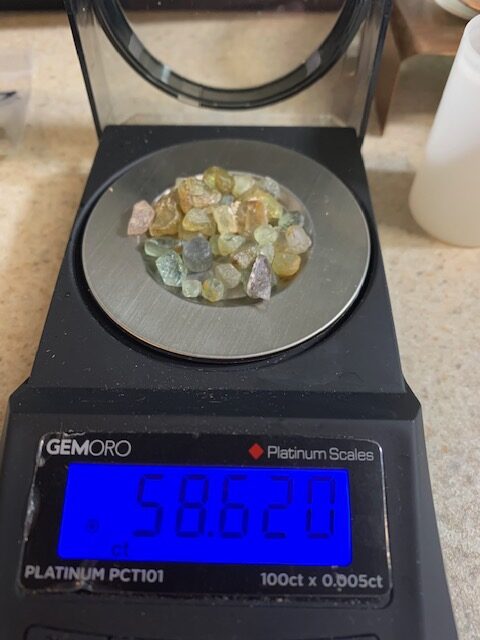
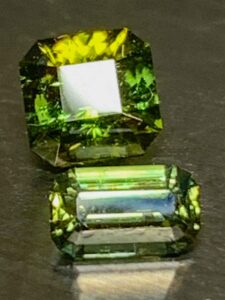
Sapphire, the September birthstone, can be blue, pink, purple, green, yellow or clear, any color except red.
Red is reserved for ruby, which is also a corundum mineral.
Montana Sapphire Hunting Adventure
Table of Contents
Click a Table of Contents Entry to jump to that article.
Club Information
Permission to use material originating in this newsletter is given freely providing that credit is given to the author and the source. Every article published in the BBG is edited for grammar and content. No flaming is allowed.
BACKBENDER’S GAZETTE SUBMISSION DEADLINES
Articles are due on the 15th day of the month before the date on the BBG issue.
Copy is due for the next issue by the 15th of this month. Email content to editor@hgms.org

President's Message
by LT Wilcox
I would like to express my appreciation and gratitude for this year’s hard-working Board Officers. We’ve had a rocky road, but I am thankful for everything y’all have done and the effort you’ve put into making the club great.
Three of our officers are stepping down and we’ll be on the lookout for new faces to fill these positions. If you are interested in volunteering he asks that you reach out to the current position holders for more information so they can give you a clear picture of duties and responsibilities and answer any questions you may have. Please review the HGMS by-laws for more information about each position as well.
Opening for the 2025 Board
- First Vice President – currently held by Jeanean Slamen
- Treasurer – currently held by Sharon Halton
- Secretary – currently held by Michelle Wilcox
Vice-President's Message
by Jeanean Slamen
Tom Zhang, a student at Rice University and one of our 2024 scholarship recipients, will give a presentation at the General Meeting on his personal collections, current projects and plans for the future. Come meet Tom and see our commitment to education in practice!
Find the Zoom link on the Events Page.
Section News
Beading – Second Saturday, 12:00 PM
Always bring beading mat, scissors, wire, wire cutter, round nose and needle nose pliers, thread, and beading needles if you have them.
- The September 14th meeting will be Saturday, September 14 at Noon. Gretchen Cocherill will be teaching us how Quilling. She has kits to make 5-pairs of earrings in different styles at a cost of $8.00 per kit. Ten (10) kits are available for purchase. Kits include 5-pair of earring findings, jump rings, a quilling tool and quilling papers. Examples are shown in the photo. Bring any quilling tools or supplies that you have. Exact change please.
- The August meeting was cancelled.
NOTICE: Do you have a bracelet or necklace that needs restringing? The Beading Section will carefully restring your piece at an hourly rate of $15.00 + materials. Contact Beading @HGMS.org to make arrangements. All funds will go to the Beading Section.
Gemstones and Faceting – Second Thursday, 6:30 PM
Our next meeting will be September 12th at 6:30 pm.
- We will review dopping gemstones with wax!
- In August, we reviewed basic steps of cutting and we had 12 new members!
Lapidary and Silversmithing – Third Monday, 7:00 PM
The next meeting will be on Monday, September 16th starting at 7:00 pm.
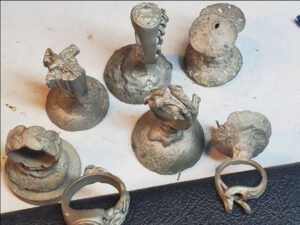
At right, see some castings that will be cleaned up and polished.
Email Lapidary@hgms.org if you have questions.
Day Light – First Wednesday, 1:00 PM
The Daylight Section meets the first Wednesday of the month from 12:00 PM to 3 PM.
The next meeting of the Daylight Section is Wednesday, September 4th at 12:00 PM.
We will have a class on working with precious metal clay, and it will cost $5.00 for materials. Please register at daylight@hgms.org so that we will have enough materials. This is very important for this session.
At our last meeting we made paper beads and then used them to make a bracelet.
Mineral – Third Wednesday, 7:30 PM
Our next meeting will be September 18th at 7:30pm. Steve will present a program subject to be determined Come see Minerals! Bring yours to show. Refreshments will be served.
The link for the Zoom meeting is:
https://us02web.zoom.us/j/4517997588?pwd=SnZjckZBTnRMbHRxZitScE9WU3RWUT09
Paleontology – Third Tuesday, 7:30 PM
The next meeting is Tuesday, September 17th at 7:30 pm. Lots of Show and Tell, and opening for a talk.
Zoom link for the meeting:
https://us02web.zoom.us/j/86053771923?pwd=ek5lNlk5SGFYNjN6U29ONU4xVElyQT09
or
Meeting ID: 860 5377 1923
Passcode: 826994
If you’d like to join the Paleo Section email list, send an email to hgmspaleosection@gmail.com and ask to be added.
Youth, First and Third Saturdays, 10:00am – 12:00pm
Mostly we will be working on cabochons and getting ready for the Show.
Shop and Building News
Shop will be closed Labor Day weekend.
Education
Class: TEXTURED RING CLASS – Metalsmith /Jewelry Shop
Instructor: Carmen Fraticelli
Date: Sunday, September 20th from 12:30 PM to 5:30 PM
Cost: Member Cost $95.00; Non-Member Cost $120.00
Description: Learn to make and texture a set of stacking rings from scratch with Carmen Fraticelli. This class is appropriate for the beginning silversmith or for expanding your knowledge of basic ring making. The class will cover creating two (2) sterling silver rings and the fundamentals of finishing a piece (the key to making it look professional). Each student will leave with 1-2 finished rings. Students will learn to calculate the length needed for a given ring size; how to form and solder the ring band; how to texture the ring band using various tools, and how to polish, and finish the rings. This is a 5-hour long class. Carmen is an excellent instructor and professional metalsmith.
Please Note:
- This class will overlap Open Shop Hours, and continue past the 4pm Open Shop Close
- Students must bring a mask (N95 or KN95)
To see details of the classes or to register for classes, go to the HGMS website
E-mail: Classes@HGMS.org to request classes, different days and times for future classes or with class preferences, or if you wish to teach a class.
Montana Sapphire Hunting Adventure
by Randy Carlson
Member, Faceting and Gemstones Section
All Photographs by Randy Carlson
Some years ago, I wrote an article for the US Faceters Guild on Montana Sapphires. My research found that there were 4 primary locations to find sapphires in the state. They are Rock Creek, Dry Cottonwood Canyon, Missouri River and Yogo Gulch. The first three locations are all secondary deposits, as the primary deposits are unknown. These locations all produce a variety of pastel-colored sapphires. I discovered that the Rock Creek and Missouri River locations have “fee dig” opportunities open to the public. You can also purchase bags of “dirt” from some locations and have them shipped to you, but because of the weight, it can be expensive. The Yogo location produces nice deep blue colored sapphires, but currently there are no fee dig opportunities. In fact, there is currently not any production at the Yogo site, due to various reasons.
I had mentioned at one of our Section meetings that one day I would like to go up to Montana to do a fee dig. I have family in Colorado and travel up there frequently. My last visit planned was this last June. When John Lee (JL) heard about this, he encouraged me to couple it with a trip on up to Montana. We decided to make it happen and when one of our newest members, John Becker, (JB), heard about it, he asked if he could join us. So, the three of us started putting plans together to make it happen.
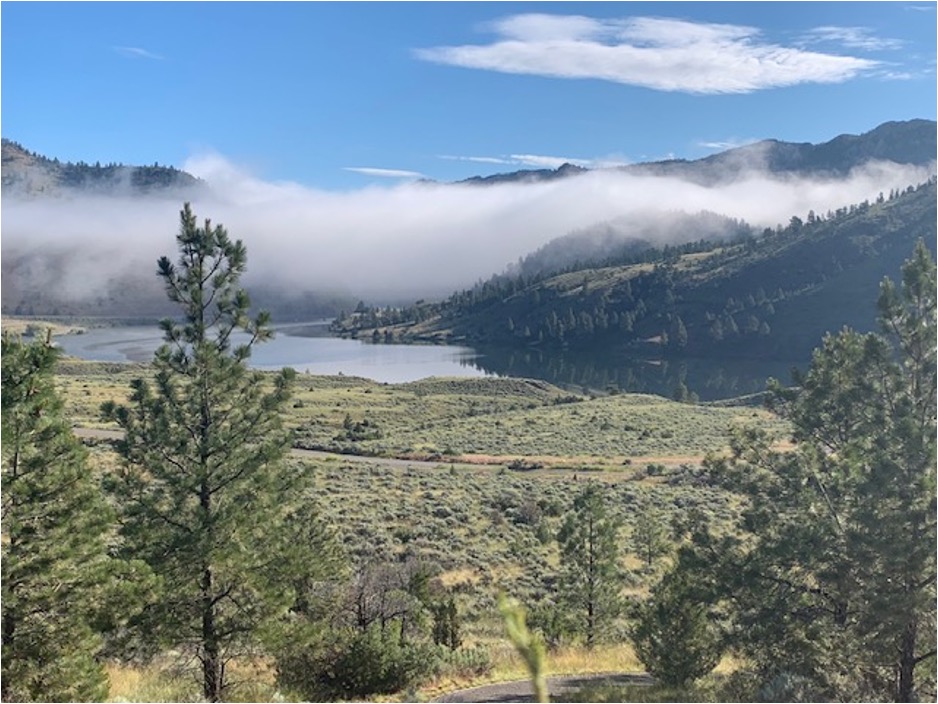
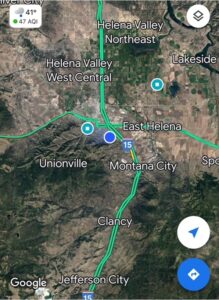
We initially planned on a visit to the Missouri River area (NE of Helena) and then were going to swing down to Rock Creek (SW Montana). I then planned the return trip through Yellowstone since other guys had never visited. I was to make the arrangements with the various mines. Thinking it would take us 2 days to get there from Denver, plus 2 days back, I planned on travel Saturday & Sunday, Monday & Tuesday in the Missouri River area, then Wednesday in the Rock Creek area and Thursday & Friday to get back to Denver. JL and JB flew in on a Friday and returned the following Saturday. For our stay in Helena, JB found us a house to rent via VRBO.
As it turned out, I never received a response from the Gem Mountain group at Rock Creek to confirm our visit. Then the first miner I contacted in Helena, Blaze Wharton, initially told me he wasn’t sure he’d be available, as he had family coming up for the week. So, in a panic, I contacted a friend, Kory Pettman, who specializes in cutting Montana Sapphires and who knows the miners in the area and explained my dilemma to her. She told me to contact the Blue Jewel mine in the Missouri River area. I did and they got back to me right away and confirmed that we could reserve spots with them for both Tuesday and Wednesday. Later that week, Blaze contacted me again and said we could book with him, so I assigned Monday for him.
Now for an interesting part of this story… about 3 weeks before our departure and out of the blue, I received a Facebook Messenger text from a complete stranger, saying “I hear you’re going to be in Montana hunting sapphires. Would you mind if I join you?” I’m puzzled, but rather than responding to the person, I just ignored the message. I mean, who does this??
Anyway, I drove up to Colorado and spent a week with my family before the other two guys flew in on Friday. The next morning, we hit the road. We take the most direct route, which is North out of Denver on I-25 and drive up to Casper, Wyoming, where we angle off to the northwest. We planned to drive to Laurel, Montana (just West of Billings) for day 1. On the way, we passed through Thermopolis, Wyoming. Along the way, I kept seeing signs about dinosaur fossils in the Thermopolis area. Since I have a project that I’m working on that uses petrified dinosaur bone, I was quite excited to see this. Then as we were driving through Thermopolis, lo and behold, there is a ROCK SHOP!! JL and I start hollering “Pull over, pull over” as JB was driving at this point!! To our utter disbelief, He says “No, we must get to Montana”, pointing forward. Can you believe this? I said, “No. Seriously. Turn around”. What does he say? “Nope, we’re on a mission”. I still have no words to explain this, but since he is a new member, we put him on probation for 3 years and he had to carry our luggage for the rest of the trip. So we make it to boring Laurel, Montana about 3 in the afternoon and just sit around looking at each other. Bad choice JB……
As it turned out, we realized it did not take two days to drive up there from Denver. We found that we could make the return trip in one long day.
Let me jump forward to Monday. We drove out to Blaze Wharton’s mine on the Eldorado Bar. The Eldorado bar is a section of the previous path the Missouri River flowed over in the past several decades (1860’s). It sits just east of the current river’s path, northeast of Helena, Montana. Back in the 1860’s, a dredge ship went through here and mined for gold. As it turns out, Blaze is actually mining the tailing piles from this ship. His operation is quite small, compared to some other outfits in the area. He is either by himself, or he has a partner that only works part-time with him. His commercial production entails him using a backhoe/front-end scooper to dig out a load of the gravel bearing section of the tailings pile, then he drops it through a “grizzly”.

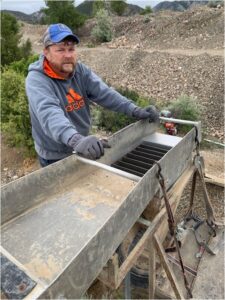
A “grizzly” screens out any rocks bigger than about 3” in diameter. He then takes this dirt and drops it through another screen, which then feeds it into a conveyer belt and drops it into a large commercial hydraulic sluice. This mechanism forces the lighter material (rocks & dirt) upwards through water force and onto a dump slide, while keeping the heavier material in the bottom of the “catch” system of the sluice. This is where the denser rocks and sapphire should accumulate. Periodically, they must shut down the system and empty the sluice catch system of the concentrated rock. This material is then sorted by shifting on a screen in a tub of water, then dumped upside down on a table. Because the heavier material sinks to the bottom, you would (hopefully) find sapphires on the top after it’s flipped. Being transparent and wet, the pieces of sapphire look like colored glass! Still, it takes some hand sifting and careful looking to find the sapphire pieces amongst everything else.
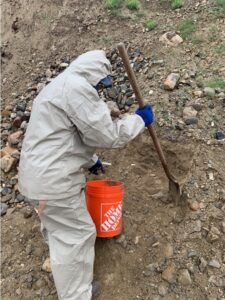
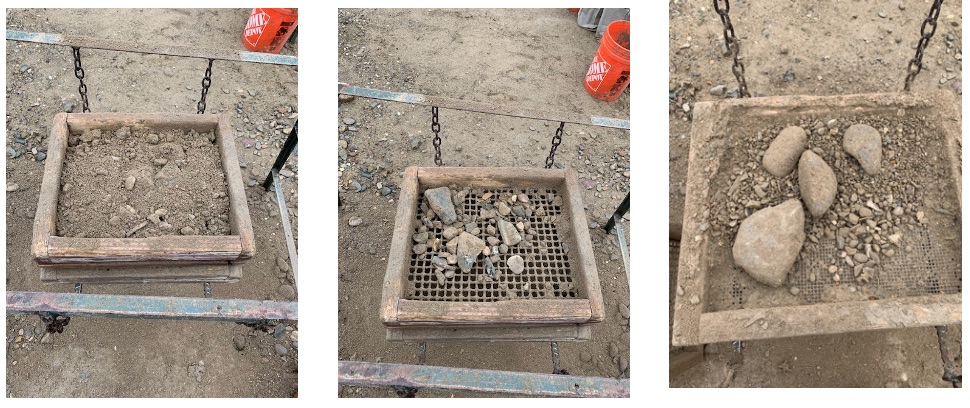
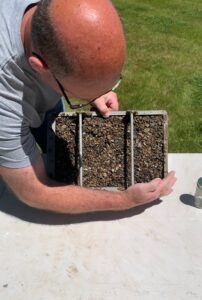
The way we looked for sapphires was kind of the same, but more manual. Blaze did not want to give us raw dirt run through the grizzly, so we had to manually pull out the big pieces of rock, then fill 5-gallon buckets and dump them through a series of screens. Stacked, they were 1 inch, ½ inch, then 1/8-inch gauge. The screens are stacked on a stand that you can shake to make the material drop through. You keep the material in the 1/8-inch screen and pour it into a “concentrate” bucket.
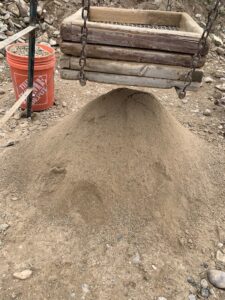
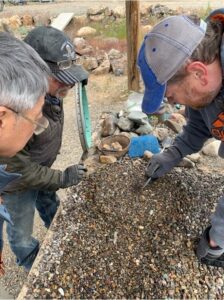
Did I mention that it was in the 40’s, breezy, with a light rain that morning? It made the manual work a bit harder and uncomfortable. By the end of the day, JL and I had 4 buckets of concentrate each, while JB had 6 buckets. Next, we had Blaze put each of our buckets through a smaller hydraulic sluice system to get to a further concentrate of just the denser material. This we poured into screens and shook them in a water tub, then turned them over onto a tabletop. Here is where we finally got to search for our sapphires. The results were not too good. JL found only a bit over 2 carats. I found 5.5 carats. JB found (I think) 18 carats from Blaze’s mine. Reality started to set in. Unless you pay a miner for a large production run, chances are, you will not find much. Oh well, it was a good experience. The material we got from Blaze is the same virgin material he is running through his production equipment. I also need to mention, Blaze is a great guy, and I truly enjoyed my time visiting with him.
Let me insert here that I looked a bit further into the message I received some weeks earlier on FB. As it turned out, the guy who contacted me lives North of Helena and his FaceBook site had some cut stones displayed, so I assumed he was a faceter. His name was Tom Greyn. I told him that we would be available on Thursday morning, if he wanted to join us.
He responded back that he actually had the mineral rights on over 200 acres on the McCune Bar and he wanted us to come join him on a dig on his site!!!! He also said that where we were digging on Monday-Wednesday, the yield would be about 50 carats per cubic square yard of dirt, but his lease was producing 600-750 carats per cubic square yard!! That, my friends, is 12-15 times the yield!! How could it be so different?? We shall see……
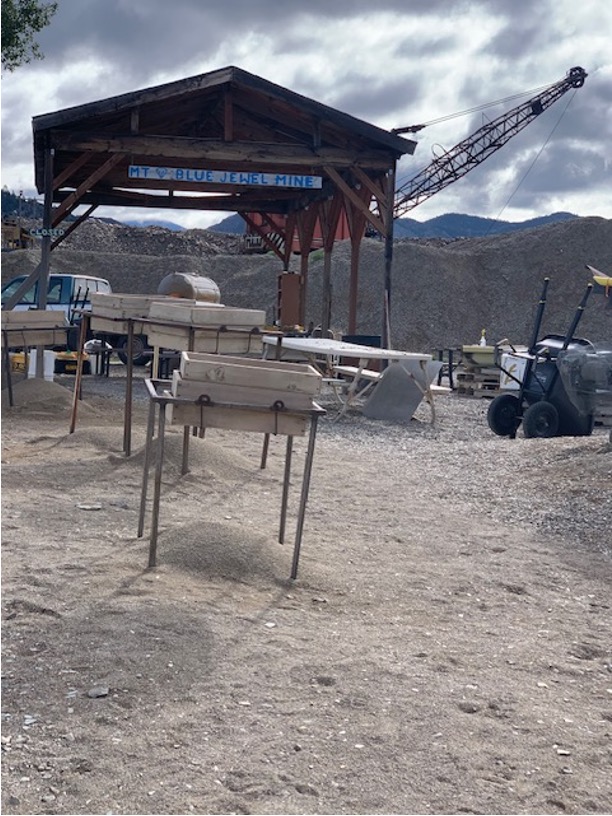
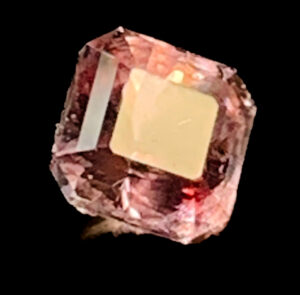
Tuesday morning, we drove out to the Blue Jewel mine. Guess where it was? Right next door to Blaze Wharton’s mine. Guess what they were mining? The same tailing pile that the gold dredge left back in 1860’s! The owner’s son in law, Eric Sorenson, was the person I corresponded with. Nice kid in his late 20’s. He had a similar set up, but his pile of dirt had been run through a grizzly, so the bigger rocks were already filtered out. They had a similar set up of screens, with 1 inch on top, followed by ½ inch, followed by 1/8 inch. Here we paid for 6 buckets per day. Same situation as at Blaze’s mine. We loaded up our 6 buckets, then we gave them to Eric and his crew and they ran it through their sluice. The total amount out of the sluice was just shy of a full bucket. This they brought to a table, then individually, you put some in your filter screens, shook it in the water, then dumped it upside down on the table. Then the examination began! On Day One at the Blue Jewel, I located about 21 carats of sapphire. Out of this, probably only 3 good, but small, cutters. Lots of little pieces that were only good as specimens.
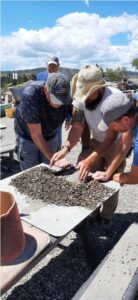
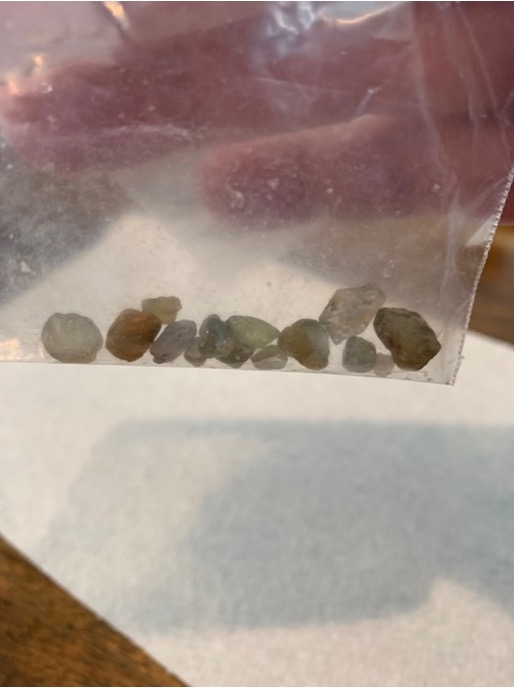
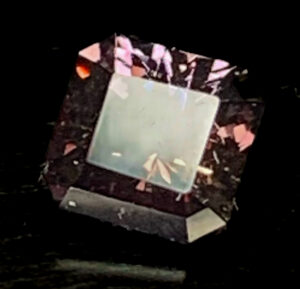
Day 2, Wednesday, at the Blue Jewel, I did the same 6 buckets and had it run through the sluice, but instead of checking it on site, I had them bag it up for me to take home. I wanted to share ½ the bag with my friend, Chuck Gartmann, who for health reasons could not make the trip. He said this was a trip of his dreams. Just to jump ahead, after I returned home, I went through the ½ bag that I kept and found about 8.9 carats of sapphire, with only about 2 small cutters, the rest being too small, or flat. As of the time of this writing, Chuck has not mentioned what he has found in his ½ bag.
The other guys both found about the same in their buckets as I did, so that’s pretty consistent.
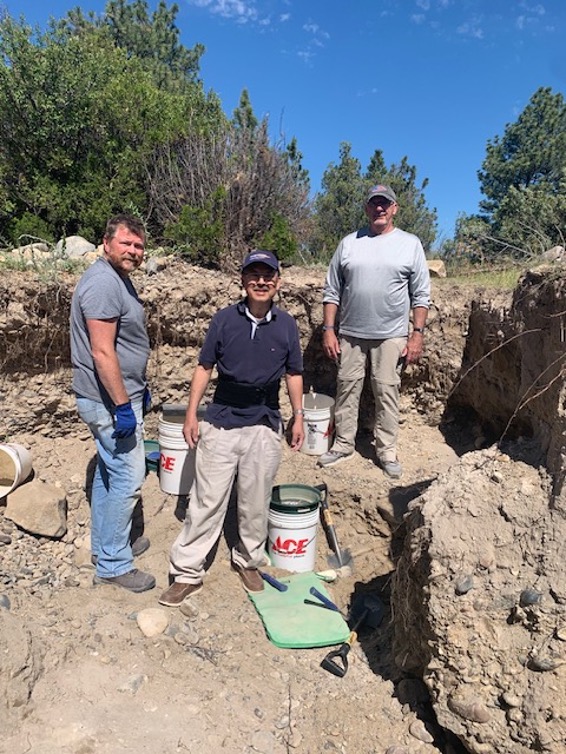
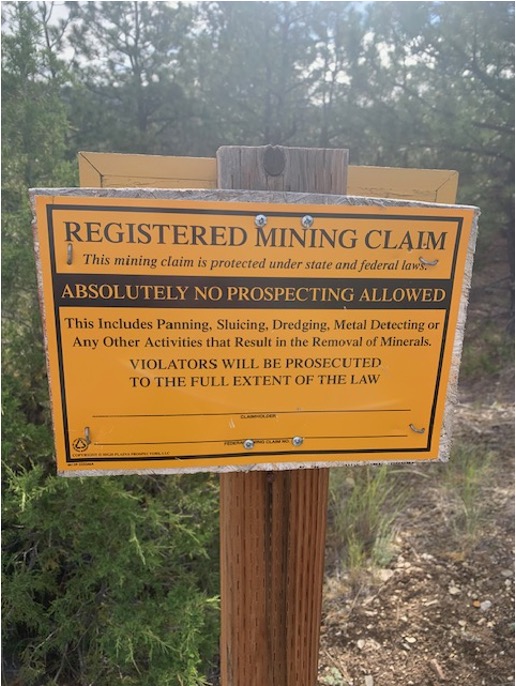
OK, now let’s jump to Thursday. We met Tom Greyn at his home, NE of Helena. Since his lease site was on BLM land, used for recreational purposes only, no vehicles were allowed, unless you had a special permit from the BLM, which Tom had. His location was on the McCune Bar of the Missouri River. The difference between the Eldorado Bar and the McCune Bar was that the 1860’s gold dredge, for some reason, could not get onto the McCune Bar, so it had not been touched! That is why the yield was, according to Tom, so much higher!
Tom took us to a site he and his partner, Steve Miller, were working. He had us dig and screen just a bit over 4 buckets of dirt total for all of us. We took it back to Tom’s house and ran it through his sluice. Tom was giving us all we found, with one exception. Anything 8 carats and over, he would keep. Fair enough! We ran it through the sluice and pulled out about 150 carats of sapphire, not including a big 8-10 carat blue stone that Tom kept. Wow! Almost exactly as he told us. He did the math and calculated that had this been a full square yard, the equivalent was 890 carats!! He truly has the best deal we have seen.
Through the year, Tom and his partner are mining about 20,000 carats. Of this, about half are good cutters. They plan on continuing their business as is, and not allowing public fee digs. He sent about 100 4 carat stones off for cutting in Sri Lanka, but the result was not as good as they had hoped for. They now prefer to sell direct to cutters and maybe to some of the rough dealers. Providing they get a good network set up, they should do really well.
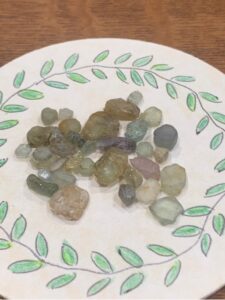
OK, my assessment – It was not cost effective to go up to Montana and do fee digs. The return was not good. I would have needed at least four 4 carat clean stones to have made it profitable. That didn’t happen and the odds of that are pretty slim. What was worthwhile was the beautiful scenery and the experience! I now know what these miners go through and it’s a tough gig, with the chances of them covering their costs and making a profit tough. Still, I wish them all the best, as they are supporting one of the great gemstone recoveries available in the United States. With the diamond market in turmoil (thanks to synthetic diamonds) more people are turning to alternative stones and the Montana Sapphire is a superb replacement!
Construction of a Small Portable Long Wave Fluorescent Mineral Display Case
by Chris Raby
Member, Mineral Section
As part of rock and mineral outreach programs that my wife Annette and I were doing, I decided to add some fluorescent minerals. Initially, I just had a few small specimens that I would set on a table with the other rocks and minerals and shine my 365nM UV LED light upon. This worked OK, but usually the area was brightly lit and the fluorescence, although noticeable, was not as effective as it could be. Also, when things got very busy, occasionally some of the specimens disappeared.
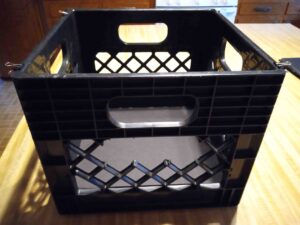
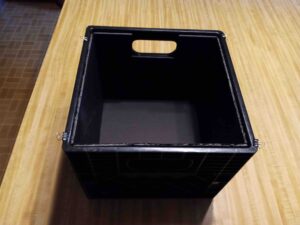
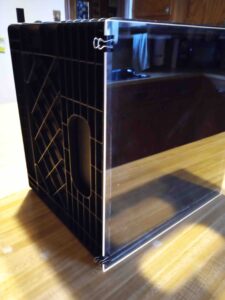
What was needed was a small portable display case that would be easy to set up and take down, hold enough items to be interesting, and be somewhat secure. We have large amounts of rocks stored in milk crates lined with cardboard to keep small rocks and fragments from falling out, so that gave me the idea to use a milk crate as the basis for the display case.
The crate is 13” x 13” x 10.5” high and laid on its side. Next, I purchased some thin flat black foamboard from Hobby Lobby and using a box cutter and a straight edge, cut five inserts to fit inside the crate to cover the four sides and the bottom with a friction fit, eliminating light intrusion from everywhere except the open top.
Where the top handhold on the crate is, I cut out that area from its foamboard insert, and that cutout is where the UV light is projected into the case.
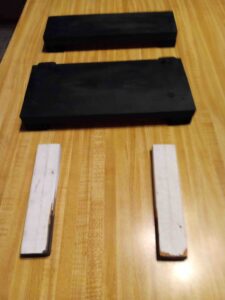
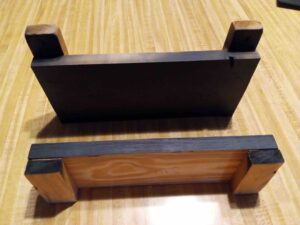
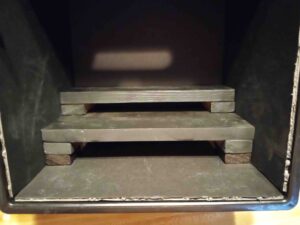
Next, using some scrap wood, I made risers for two shelves and painted them flat black. The risers are adjustable by adding short 1” x 2” wood pieces to raise the height if needed. Only the surfaces that are visible need painting.
The last purchase was a 13” x 13” x 1/8” piece of plexiglass to seal the case from prying hands. It is attached to the crate top with four mini binder clips. The total material cost of the finished case is less than $25, assuming you have some black paint and wood scraps on hand.
A total of nine specimens fit in this case, all of which show a strong fluorescence in 365 nM UV light. They are a calcite cleavage from Mexico; a small calcite polished sphere from Mexico; two fluorites, locations unknown; a hackmanite from Quebec, Canada; a hackmanite from Ontario, Canada which is tenebrescent; a small ruby in fuchsite polished sphere from Karnataka, India; a tricolor chalcedony, unknown location; and a wernerite from Quebec, Canada.
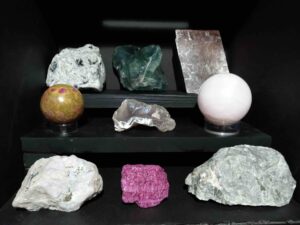
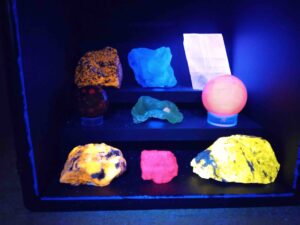
We use this small case at events where we have a table and large numbers of people walk by and look. Several of these events have been at the Louisiana Art and Science Museum in Baton Rouge, where 600 to 1300 people came by in the four-hour events.
For events with a more controlled environment, such as a classroom or library, where I want to show more specimens, I built two larger identical display cases 36” long, 14” high and 12” deep. The long wave box has plexiglass, and the short-wave box has museum glass to reduce fogging. The open viewing area is 11” high x 34” long. Both boxes are open at the top, so an open metal shelf section is placed on top for the UV lights.
Note: Tenebrescence describes a mineral or gemstone that will change color when exposed to sunlight but will slowly turn back to its original color when taken back into a darkened room.
Huge Diamond found in Botswana
Don Shurtz, Pleasant Oaks Gem and Mineral Club of Dallas
Chips and Chatter September 2024
I trust that everyone has heard of the Cullinan diamond found in January 1905. It was found in South Africa. It was and remains the largest diamond ever found. It weighed an astounding 3106 carats. The Cullinan was eventually cut into 9 major stones and 96 minor stones. The largest of the 9 major stones was the Cullinan I, also known as the Great Sar of Africa, which weighed in at 530.2 carats.
Recently (in August 2024) a huge diamond was found in Botswana. The diamond’s weight is 2492 carats. It was found in the Karowe Diamond Mine which is owned by the Canadian-owned company Lucara Diamond. The diamond is now the second-largest diamond ever mined! The mine uses a new Mega Diamond Recovery (“MDR”) X-ray Transmission (“XRT”) technology. They use X-rays to identify large stones in the mine’s rough, and then new grinding techniques and equipment to remove large stones from the surrounding matrix without damaging the diamond.
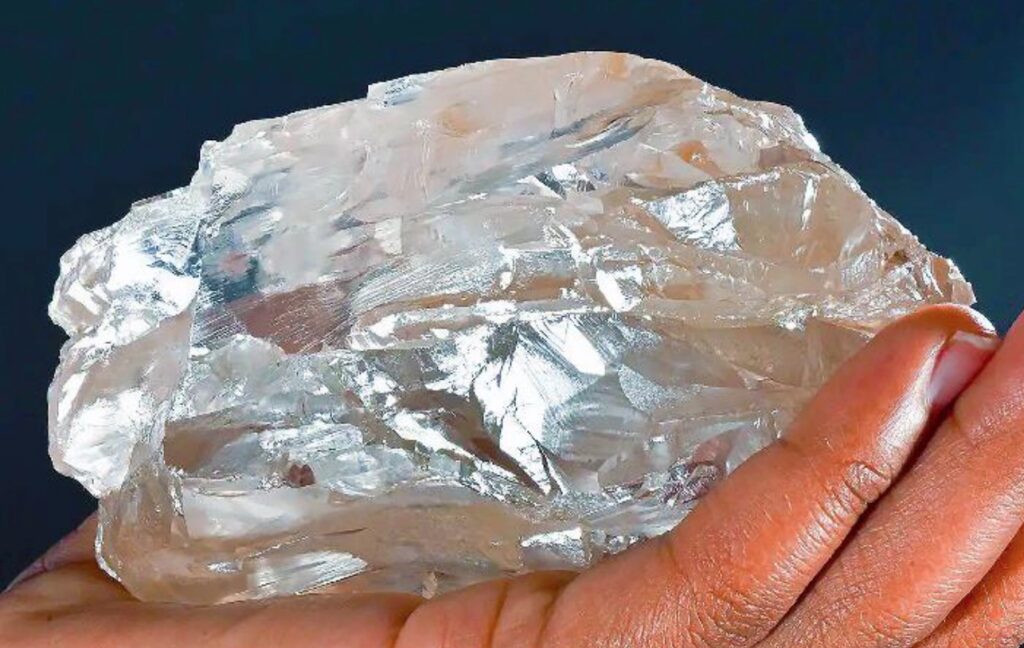
This new diamond has yet to be named. Lucara is continuing to examine the stone to determine its clarity and possible included fractures. Like most of the large diamonds, it will likely be sold and cut into large and small diamond gemstones.
References:
Smithsonian Magazine, https://www.smithsonianmag.com/smart-news
Second Largest Diamond, New York Times, https://www.nytimes.com/
Cullinan Diamond, Wikipedia, https://en.wikipedia.org/wiki/
Biosignatures in Agates from Kerrouchen, Morocco (Excerpt)
by Ulf Thewalt and Gerda Dörfner (Gerstetten, Germany)
(English translation: Douglas Moore and Johann Zenz with the assistance of the translation software DeepL, free version)
Reprinted by permission
The closer you look at an agate, the more interesting details you can see. To “look closely” you place the agate under a stereo loupe or a microscope and take your time to examine it.
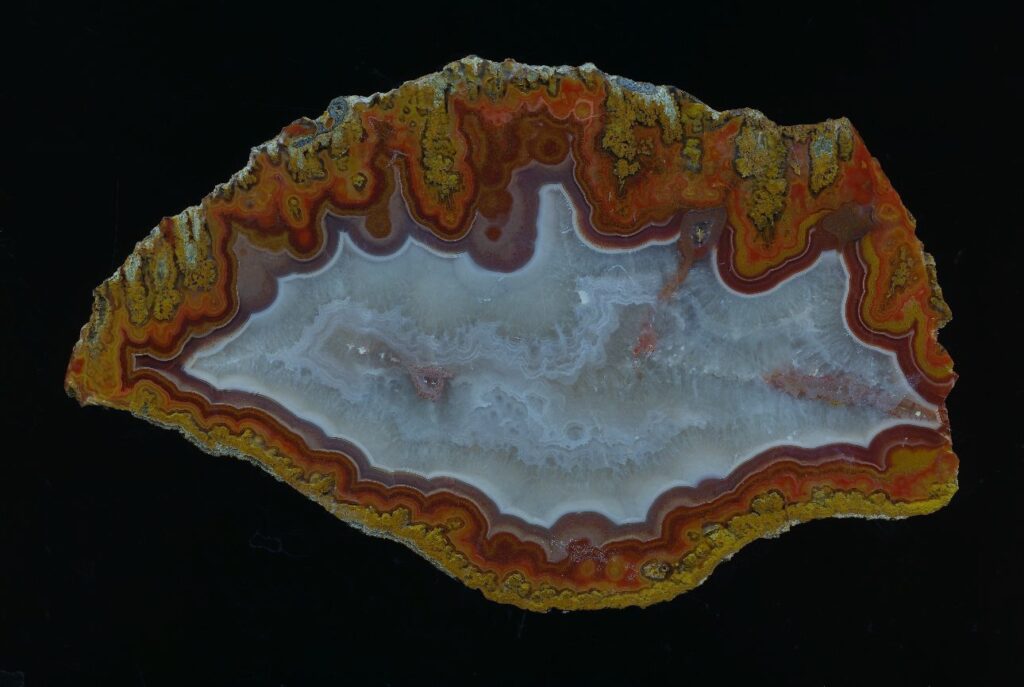
This article examines agates from the Kerrouchen area, a small village in the Middle Atlas Mountains in Morocco.In addition to cm-sized cauliflower-shaped bacterial colonies, other biosignatures can be found in agates from Kerrouchen. Microscopically small formations can be found in the areas adjacent to the “cauliflowers” and also in the interior of the agates. Thread-like, roundish and spherical formations are seen along with aggregates composed of these components. Chain-forming and coccoid bacteria are possible causes.
At right, Agate from Kerrouchen , Morocco . 13 1 cm. The walls of the former cavity are colonized with silicified cauliflower like formations. In the surrounding orange, red, violet and colorless areas there are chalcedony bands running parallel to each other. Megaquartz is crystallized in the central area. Ulf Thewalt collection and photo
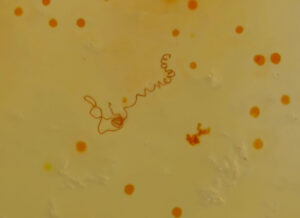
At left, curved and spiral-shaped smooth red “thread” inclusions can be found in the cloudy chalcedony areas surrounding the “cauliflowers”. There they occur as companions of “microspheres”. The spiral shapes are particularly striking, resembling spiral-shaped bacteria (spirillae). The filaments have a nearly constant thickness, are of the same color (brown, copper-red) and are not encrusted. es of thread These are probably strands of bacteria that have grown in situ, floating in the chalcedony matrix. The dark red color indicates the activity of iron oxidizing bacteria. Image width is 0.6 mm.
Tangle-like red thread aggregates occur in some of the Kerrouchen agates. The structures are undoubtedly the remains of colony-forming organisms (bacteria) as their morphology suggests. The formation and growth of similar-looking three-dimensional Bacterial colonies have been observed in medical microbiology. When such clusters occur, there are several of them. The photo on the right, below, shows two clusters that have grown in the same chalcedony band, hinting that they probably formed at the same time.

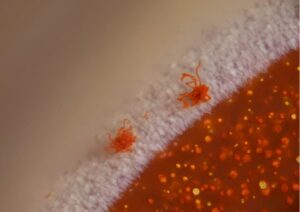
Below, an aggregate of relatively long components. The morphology suggests that these are biosignatures. Image width is 1.6 mm.
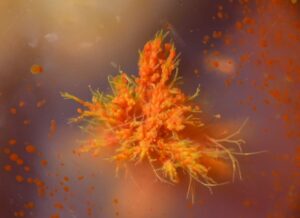
Many hematite growths resembling parasites have formed on the branches of this yellow aggregate, below. Image width 1.36 mm.

The agates pictured in this report were acquired at mineral shows and purchased on Ebay. All photos were taken of polished specimens using a classic microscope equipped with a system camera. Several individual images were “stacked” using the Helicon Focus program (HeliconSoft, 61062 Charkiv, Ukraine). This resulted in increased depth-of-field as compared to individual images.
All photos in this article are by Ulf Thewalt and all agates are from the Thewalt-Dörfner collection.
References:
CAMPOS-VENUTI, M. (2022): Biominerals – Microbial Life in Agates and other Minerals. Eigenverlag. 526 p.
GÖTZE, J., MÜLLER, A., POLGARI, M. & PAL-MOLNAR, E. (2011): Biosignaturen in Achat/Chalcedon – Die Rolle von Mikroorganismen bei der Bildung von SiO2. Mineralien Welt 1/2011. Bode Verlag, Salzhemmendorf. 90-96.
GÖTZE, J. (2011): Achat – Faszination zwischen Mythos und Wissenschaft. 19-133. In ZENZ, J.: Achate III. Bode Verlag, Salzhemmendorf. 696 p.
GÖTZE, J., MÖCKEL, R. & PAN, Y. (2020): Mineralogy, geochemistry and genesis of agate – A review. Minerals 10(11). 1037.
MAMOU, G., MOHAN, G.B.M., ROUVINSKI, A., ROSENBERG, A. & BEN-YEHUDA, S. (2016): Early developmental program shapes colony morphology in bacteria. Cell Reports, 14(8). Available on the Internet. 1850-1857.
MAYER, D. (2013): Erlesene Achate. Bode-Verlag, Salzhemmendorf. 424 p. MAYER, D. (2017): Mehr erlesene Achate. Bode-Verlag, Salzhemmendorf. 424 p.
MC MAHAN, P. (2009): Einschlüsse in Achat. 516-644. In ZENZ, J.: Achate II. Bode Verlag, Haltern am See. 696 p.
NATKANIEC-NOWAK, L., DUMANSKA-SLOWIK, M., PRSEK, J., LANKOSZ, M., WROBEL, P., GAWEL, A., KOWALCZYK, J. & KOCEMBA, J. (2016): Agates from Kerrouchen (the Atlas Mountains, Morocco): Textural types and their gemmological characteristic. Minerals 6(3). Available on the Internet. 77.
SCHMITT-RIEGRAF, C. & RIEGRAF, W. (2015): Vulkanite, Mandelsteinbildungen und Mikrofossilien im Steinbruch Juchem (Unter-Perm, Rheinland-Pfalz). In LORENZ, J. & MÜSSIG, K. (Ed.): Juchem – Achate, Drusen, Sammler. Mitt. Naturwiss. Mus. Aschaffenburg, Bd. 27, 64-161.
THEWALT, U. & DÖRFNER, G. (2012): Wie kommt das Moos in den Moosachat – und wie nicht? Beiträge zu einer alten Frage. Der Aufschluss 63, VFMG, Heidelberg. 1–16.
ZENZ, J. (2009): Achate II. Bode-Verlag, Haltern am See. 696 p.
Please see the original article (in translation) at:
https://www.google.com/search?client=firefox-b-1-d&q=AGATES.CLICK+2024+Thewalt+Biosignatures
HGMS Board of Directors Meeting
Meeting Minutes for January 3, 2023
| Board Member | Section Board Member | ||
| X | President – LT [Logan] Wilcox [LT} | X | Beading – Maggie Manley [MM] |
| X | 1st Vice President – Jeanean Slamen [JS] | X | Day Light – Fred Brueckner [FB] |
| X | 2nd Vice President – Sarah Metsa [SM] | X | Gemstones & Faceting – Randy Carlson [RC] |
| X | Treasurer – Sharon Halton [SH] |
X | Lapidary & Silversmithing – Richard Good [RG] |
| X | Secretary – Daniel Rodriguez [DR] | X | Mineral – Ray Kizer [RK] |
| X | Past President – Nancy English [NE] | X | Paleontology – Mike Dawkins [MD] |
| X | Web & Show – Scott Singleton [SS] |
The minutes for the Board Meeting of August 6th will be posted as soon as they are available.
HGMS General Meeting Minutes
by Daniel Rodriquez
The minutes for August 27th’s General Meeting will be posted as soon as they are available.
Upcoming Shows
Southwest Rock, Gem & Jewelry Show
09/21/2014 – 09/22/2024
Rolling Oaks Mall, 6909 N Loop 1604 E
San Antonio, Texas
Lubbock Gem & Mineral Show
09/28/2014 – 09/29/2024
Sat. 10:00am -6:00pm, Sun. 11:00am – 4:00pm
Lubbock Memorial Civic Center
1501 Mac Davis Lane, Lubbock, Texas
Arlington Gem & Mineral Club
Fall Parking Lot Sale
10/05/2024
1408 Gibbins Road, Arlington, Texas
Tri-City Gem and Mineral Society Show
10/12/2024 -10/13/2024
Sat. 9:00am – 6:00pm, Sun. 10:00am – 5:00pm
Frank W. Mayborn Civic and Convention Center
3301 N. 3rd Street, Temple, Texas
contact Lois Ruth Rolston, (254) 718-2559
Email: lrolston@hot.rr.com